Research Overview
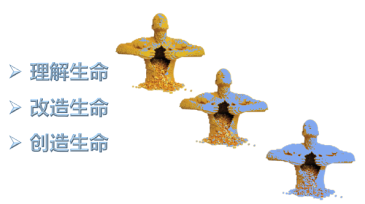
The research group focuses on the heterogeneity of stem cells, immune cells, and tumor cells, as well as the mechanisms of cell fate determination. By developing novel quantitative single-cell experimental and analytical techniques, combined with systems biology approaches and synthetic biology tools, the group studies the key regulatory factors of cell heterogeneity and fate decisions at the single-cell level. The aim is to gain an in-depth understanding of important processes such as development, immunity, and disease at the single-cell level, and further to precisely intervene in these processes using drugs or synthetic biological devices.
RESEARCH DIRECTION
1、Analyzing cell-to-cell variability in time
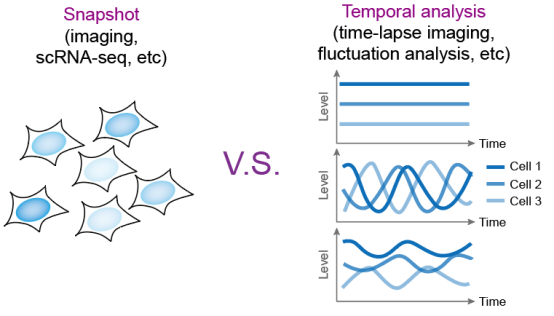
Single-cell analysis tools have revolutionized many disciplines of biology. Yet, despite the growing single-cell data, we often lack a temporal view of how cells maintain homeostasis or how they respond to environmental signals at the individual cell level. Temporal analysis of single cells is critical for understanding the mode, mechanism, and function of cell-to-cell variability.
2、Deciphering regulatory principles by profiling transcription factor dynamics
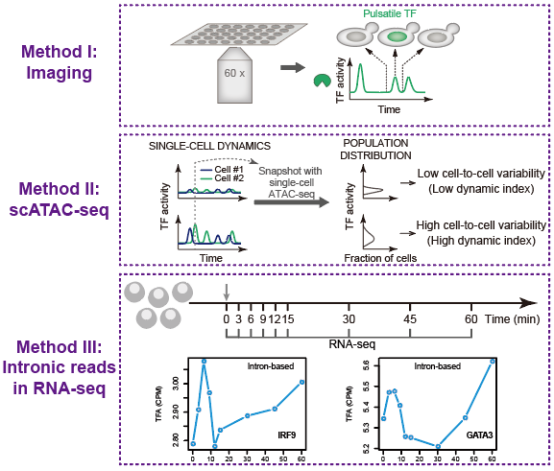
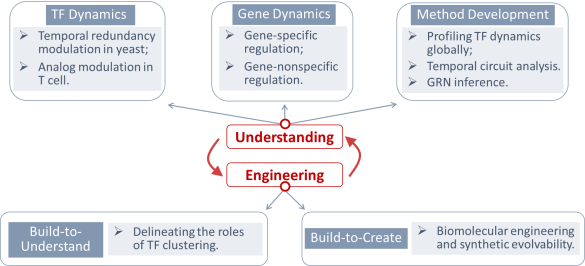
An important mechanism accounting for the variability among cells is the regulatory dynamics, particularly the activity dynamics of transcription factors (TFs). We have been interested in two areas of research related to TF dynamics: the profiling of TF dynamics across systems and conditions, and the functional roles of TF dynamics in development, differentiation, and immunity.
3、Toward robust and predictable cellular programming
Programming mammalian cells and tissues with synthetic biological devices faces two key challenges: 1) individual cells in a tissue are highly heterogeneous, exhibiting different responses to the same input; 2) synthetic devices often fail to operate as designed due to interferences from the host cell. We are working on addressing both challenges through data-driven rational design as well as high-throughput screening.
Overview of Research Findings
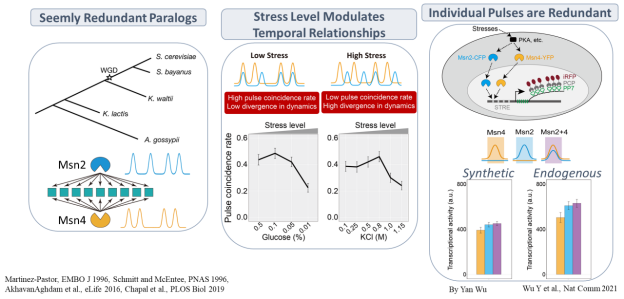
Representative Achievement One: New Patterns and Mechanisms of Dynamic Transcriptional Regulation
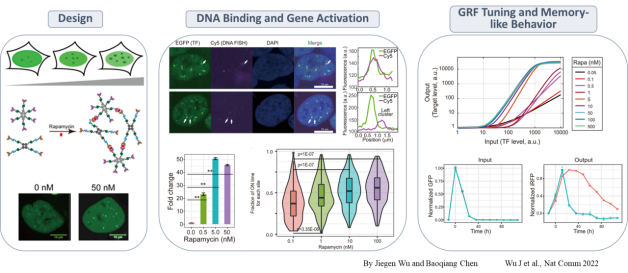
Representative Achievement 2: Novel Synthetic Transcription Factors in Mammals
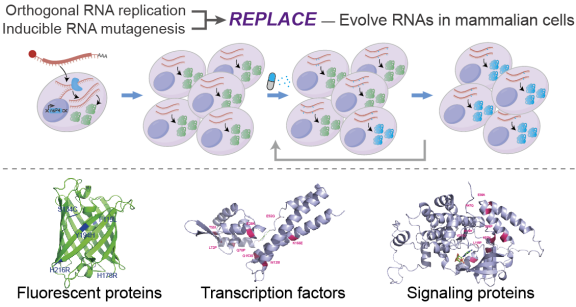
Representative Achievement Three: Development and Application of Continuous Directed Evolution Tools in Mammalian Cells
Ma L and Lin Y, Nat Chem Biol. 2025




 English